Production of TPE-Based Wall Guard
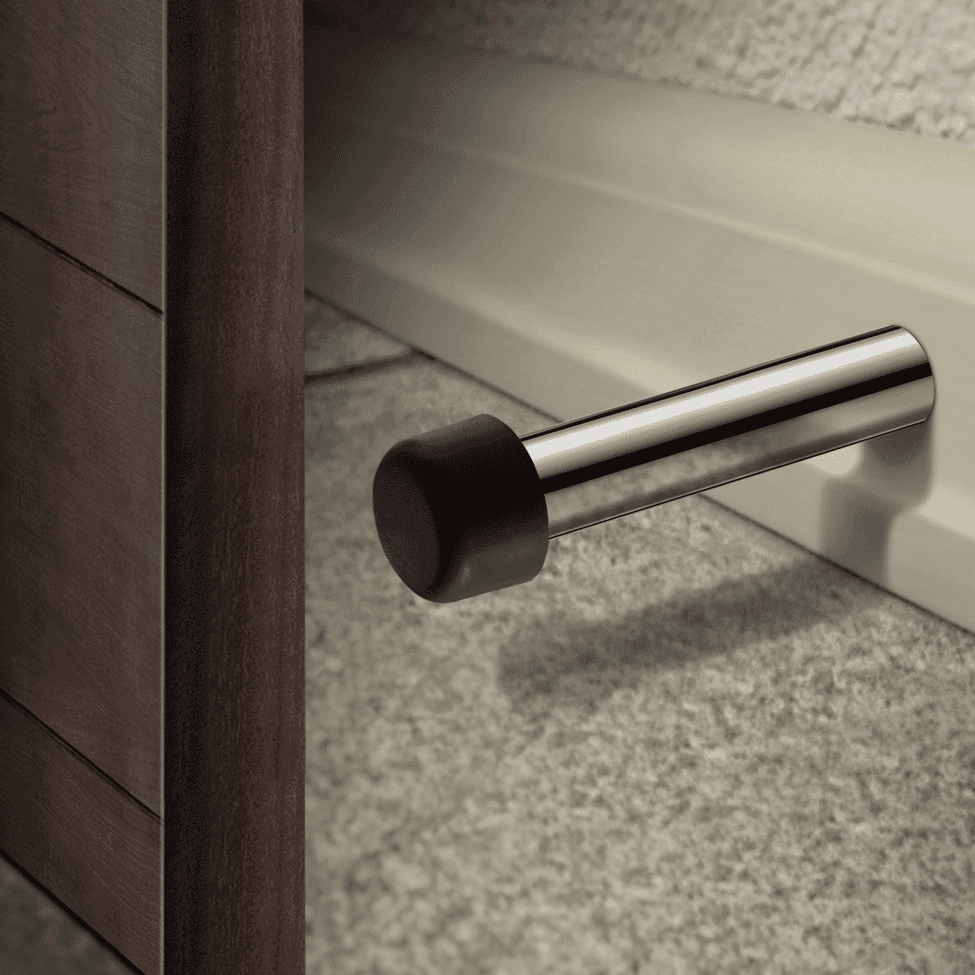
Production of TPE-Based Wall Guard requires careful attention to both design and material selection to ensure durability, safety, and aesthetic compatibility in various environments. While door and wall guards might seem like simple accessories, they must perform under pressure and frequent contact without compromising appearance or function.
Key performance requirements
Key performance indicators include suitable hardness, easy processing, high-quality surface finish, low surface friction, and excellent colorability. Thermoplastic elastomers (TPEs) offer a unique combination of these properties, making them a reliable material for this purpose.
TPE grades can be fine-tuned to meet specific application demands, whether it’s for residential, commercial, or industrial spaces. Their adaptability in molding processes allows manufacturers to create efficient and cost-effective solutions. As a result, production of TPE-based wall guard using customized TPE compounds provides both impact resistance and design flexibility, ensuring long-term satisfaction for end users.
Sustainability and material choice
In addition to its excellent mechanical properties, TPE-based wall guards offer significant advantages in terms of environmental sustainability. As the demand for eco-friendly materials increases, TPEs are gaining recognition for their recyclability and reduced environmental impact compared to traditional materials like PVC. This makes them a more sustainable option for industries looking to reduce their carbon footprint while maintaining high-performance standards.
UV and weather resistance
Furthermore, the availability of TPE grades with enhanced UV and weather resistance makes them suitable for both indoor and outdoor applications. This adaptability extends the lifespan of wall guards in various environmental conditions, ensuring long-term durability and performance.
ChatGPT said:
Design flexibility
TPE-based wall guards not only provide excellent durability but also offer superior flexibility in design. Their ability to be molded into various shapes and sizes allows for customized solutions that meet specific aesthetic and functional requirements. This makes them an ideal choice for diverse applications, from residential spaces to high-traffic commercial areas, ensuring both protection and visual appeal.
FARRPRENE GRADES
Grades commonly specified for construction applications
| GRADE | HARDNESS | TENSILE (MPa) | TYPICAL USE |
|---|---|---|---|
| EU401AExtrusion / Unfilled | 40 Shore A | 6.5 | Soft compression gaskets and glazing seals (extrusion) |
| EF455AExtrusion / Filled | 45 Shore A | 6 | Window/door weather seals - low flow for stable profiles (extrusion) |
| EF551AVExtrusion / Filled | 55 Shore A | 5.5 | Expansion-joint and profile seals (extrusion) |
| EF651AExtrusion / Filled | 65 Shore A | 7 | Hard-wearing weatherstrip and gasket profiles (extrusion) |
Typical average values from a limited sample set; not a formal specification. Request the signed datasheet for current values.
ABOUT THE AUTHOR
Technical Content Lead
Writes the Farr Polychem technical library, covering thermoplastic elastomer chemistry, grade selection and processing for design and manufacturing engineers.
VIEW PROFILE →MORE INSIGHTS
View All Articles