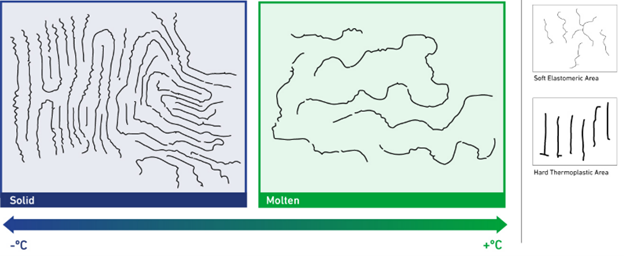
Thermoplastic elastomers (TPEs) are versatile materials that combine the elasticity of rubber with the processability and mechanical strength of plastics. These materials typically consist of two main phases: a soft phase and a hard phase. The molecular microstructure of TPEs defines the unique properties of each grade. Manufacturers can tailor these properties for specific applications across industries. At temperatures below the melting point, the hard phase provides mechanical strength and thermal stability. The soft phase, being in an elastomeric, rubbery state, offers flexibility, softness, and elasticity. This combination of properties makes TPE highly versatile. It is suitable for various manufacturing processes such as injection molding, blow molding, extrusion, thermoforming, and blown film. By selecting the appropriate polymers for each phase, manufacturers can customize TPEs for specific requirements. This ensures high performance in diverse applications.
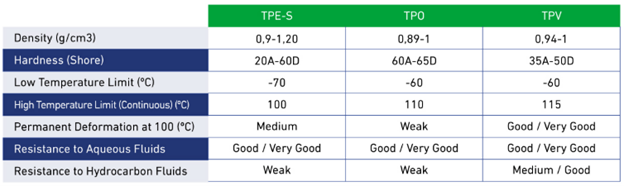
The table below summarizes the general properties of different TPE types:
TPS (Styrenic Thermoplastic Elastomers) offer excellent transparency and good heat resistance. This makes them ideal for applications that require clarity and durability.
TPO (Olefin-based Thermoplastic Elastomers) are highly resistant to chemicals. They also exhibit excellent mechanical strength, making them suitable for demanding applications.
TPV (Thermoplastic Vulcanizates) feature a cured soft phase. They exhibit very low compressive set, offering superior resistance to pressure. This makes them ideal for high-performance environments.
Thermoplastic elastomers (TPEs) have gained increasing use across a wide range of industries due to their adaptability and superior performance. From automotive parts to medical devices, the molecular structure of TPEs ensures they meet the specific needs of each application.
These unique properties of TPEs have led to their widespread use across various sectors, including automotive, medical, and consumer goods. In the automotive industry, TPEs are ideal for producing interior components like handles, pedals, and tubing due to their adjustable mechanical properties and resistance to various environmental conditions. Similarly, the medical field highly values TPEs for manufacturing parts that come into contact with the human body, such as medical tubes, gloves, and sterilizable components, because of their non-toxic and safe properties.
Additionally, packaging and household goods industries utilize TPEs for their high molding capabilities and compatibility with other materials. Manufacturers use them in products like electronic accessories, sports equipment, and home appliances.
Overall, TPE ability to adapt to diverse industry needs and enhance product performance while reducing production costs has made them one of the most widely used and popular materials across different sectors.