The development of smart food storage containers has accelerated in recent years, driven by the growing demand for improved food safety, quality monitoring, and user convenience. These advanced products require innovative raw materials capable of meeting both functional and regulatory requirements. Thermoplastic elastomers (TPEs) have emerged as a highly suitable solution for such applications. This article examines the benefits and functional roles of TPEs for Food Storage Containers, focusing on their versatility, tunable properties, sensor compatibility, and sustainability advantages.
Food storage containers are no longer limited to passive packaging functions. Today, they are increasingly integrated with smart sensors designed to monitor food quality and storage conditions. The manufacturing of these technologically advanced containers requires materials that combine flexibility, performance customization, and compliance with food-contact regulations. In this context, TPEs for Food Storage Containers offer a compelling material solution, supporting both structural and functional innovation.
Application of TPEs in Food Storage Container Design
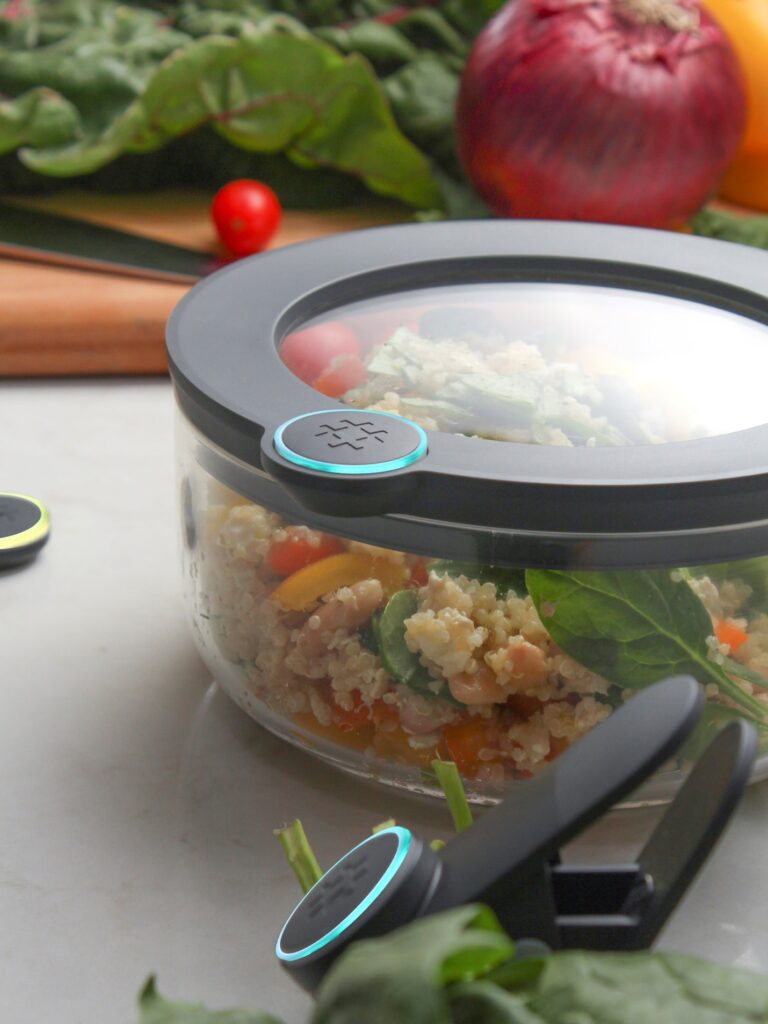
Thermoplastic elastomers can be used across multiple components of food storage containers. They are suitable for the main body of the container, where flexibility and durability are required, as well as for soft-touch layers applied over base plastics to enhance handling and user experience. In addition, TPEs are widely used in sealing elements integrated into container lids, where reliable sealing performance is critical. For all these applications, food-contact-compliant TPE grades can be developed, ensuring safety and regulatory adherence without compromising design flexibility.
Tunable Material Properties for Advanced Performance
A key advantage of TPEs lies in their ability to be precisely engineered to meet specific performance requirements. Their physical, mechanical, and thermal properties can be tailored according to application needs. This adaptability allows manufacturers to optimize container performance for different use cases while maintaining consistent quality. As a result, TPEs for Food Storage Containers provide a high level of design freedom that is difficult to achieve with conventional materials.
Role of TPEs in Smart Food Storage Technologies
Beyond structural applications, TPEs offer unique benefits for smart food storage solutions. Certain TPE formulations allow for adjustable electrical and thermal conductivity, making them suitable for use in sensor systems integrated into food storage containers. These sensors enable real-time monitoring of food quality, contributing to improved food safety and reduced waste. The compatibility of TPEs with such technologies further reinforces their value in next-generation food storage containers.
Sustainability and Recyclability Considerations
Sustainability is an increasingly important factor in packaging material selection. TPEs are recyclable materials and can also be produced from bio-based resources. These characteristics support the development of more sustainable packaging solutions and align with broader environmental goals within the food packaging industry. The use of TPEs for Food Storage Containers therefore contributes not only to functional innovation but also to improved environmental performance.
Conclusion
Thermoplastic elastomers represent a versatile and future-oriented material choice for modern food storage containers. Their ability to support smart sensor integration, offer tunable physical and conductive properties, comply with food-contact requirements, and contribute to sustainability makes them particularly well suited for this application. As demand for intelligent and eco-conscious food storage solutions continues to grow, TPEs for Food Storage Containers are expected to play an increasingly important role in the evolution of food packaging technologies.