Modern vehicles are designed not only for transportation but also as expressions of style, technology, and environmental responsibility. In recent years, global automakers have prioritized the use of sustainable materials to reduce environmental impact without compromising quality or performance. One material that meets these demands is Sustainable TPE (Thermoplastic Elastomer) — a versatile class of polymers that combine the elasticity of rubber with the processability of thermoplastics.
What Makes TPE “Sustainable”
A Sustainable TPE is defined by its ability to deliver high performance while minimizing environmental impact throughout its life cycle. These materials can incorporate recycled content, bio-based feedstocks, or both. They also consume less energy during processing compared to thermoset rubbers and can be recycled or reprocessed multiple times.
Key sustainability features include:
- Reduced carbon footprint: due to lower processing temperatures and energy consumption.
- Recyclability: enabling closed-loop manufacturing and waste reduction.
- Use of renewable resources: when bio-based polymers replace fossil-derived components.
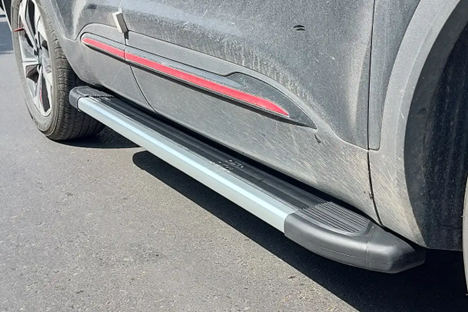
Importance of TPE in Automotive Side Step Applications
Among exterior automotive parts, side steps (or rocker panels) are particularly demanding. These components must combine structural strength, aesthetic appeal, and long-term weather resistance. The typical side step structure consists of a metallic or composite base covered with a TPE outer layer that provides protection and enhances the vehicle’s visual identity.
For such applications, eco-friendly TPE offers:
- Excellent UV resistance, ensuring durability under continuous sunlight.
- Superior abrasion and tear resistance, maintaining surface integrity under frequent use.
- Outstanding color stability, preventing fading or discoloration over time.
- Design flexibility, allowing the creation of textured or patterned surfaces that improve grip and style.
Performance Advantages over Traditional Materials
Conventional materials such as PVC or thermoset rubbers have long been used for automotive trims but present several drawbacks, including heavy weight, poor recyclability, and higher environmental impact. In contrast, Sustainable TPE provides a lighter, more efficient, and environmentally responsible alternative.
Comparative advantages include:
- Lower density, contributing to reduced vehicle weight and improved fuel efficiency.
- Shorter cycle times during molding, enhancing production efficiency.
- No need for vulcanization, minimizing energy usage.
- Full recyclability, reducing landfill waste.
Environmental and Economic Benefits
The adoption of eco-friendly TPE aligns with global efforts toward greener manufacturing. By integrating recycled polymers or bio-based components, manufacturers can achieve compliance with environmental regulations such as EU Green Deal or ISO 14001 standards. Additionally, recyclability reduces material costs and dependence on virgin feedstocks, supporting circular economy principles.
Economically, these materials offer excellent long-term value. Their durability minimizes maintenance and replacement costs, while their compatibility with existing thermoplastic processing equipment eliminates the need for major production changes.
Future Outlook
As sustainability becomes an integral part of product development, the demand for Sustainable TPE compounds is expected to increase across automotive segments. Future innovations will likely focus on enhancing mechanical strength, developing fully bio-based TPEs, and optimizing recyclability without sacrificing surface quality or processability.
The ongoing collaboration between polymer manufacturers and automotive OEMs will accelerate the integration of Sustainable TPE into vehicle design — supporting the industry’s journey toward zero-emission, resource-efficient mobility.
Conclusion
The transition to sustainable materials is not merely a trend but a strategic necessity for the automotive industry. Sustainable TPE stands at the intersection of performance, aesthetics, and environmental responsibility. Its unique combination of durability, recyclability, and processing efficiency makes it an ideal choice for components such as side steps. By adopting these innovative materials, automakers can reduce their ecological footprint while maintaining the high standards of quality and design that define modern vehicles.